Articles tagged with: Abraham Lincoln

American Civil War Nicknames

I started a new series on the site based on the book 1,001 Things Everyone Should Know About American History, by historian John Garraty. If you haven’t already, check out the first post in the series–His Accidency. Facts number 61-72 are Civil War nicknames. The list is as follows:

  1. #61 Honest Abe
  2. #62 Father Abraham
  3. #63 Unconditional Surrender
  4. #64 Stonewall
  5. #65 Little Phil
  6. #66 Beast
  7. #67 Fighting Joe
  8. #68 Slow Trot
  9. #69 Rock of Chickamauga
  10. #70 Young Napoleon
  11. #71 Napoleon in Gray
  12. #72 Copperheads

Some of these nicknames are well-known and will come as no surprise to you.

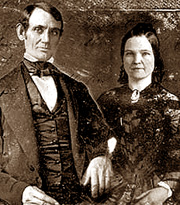
Abraham-Lincoln-nickname“Honest Abe” and “Father Abraham” are both nicknames for President Abraham Lincoln. Abraham Lincoln became known for his honesty long before he became a politician. While there are numerous tales as to how he received the nickname of Honest Abe, Father Abraham is more interesting to me. Not that the nickname Father Abraham in and of itself is interesting, but the meaning behind it. Also, the fact that the book mentions the name, but offers up no explanation seems strange. (Pictured right)

As best as I can tell, Lincoln received this nickname because he led the nation as Abraham led his nation in the Bible. I find it odd because it is well know that Abraham (from the Bible) had hundreds of slaves. As an owner of slaves, purchased with his own money, I would think it unwise to nickname President Lincoln after this man.

“Unconditional Surrender” was the nickname of Union General Ulysses S. Grant. This nickname originated when he sent word to Confederate General Simon Bolivar Buckner that ”no terms except an unconditional and immediate surrender can be accepted. I propose to move immediately upon your works.” As the Battle of Fort Donelson, which ended on February 16, 1862, was one of the Union’s first victories, word of it spread quickly and the U.S. in General U.S. Grant quickly became known as Unconditional Surrender.

“Stonewall” was the nickname of Confederate General Thomas J. Jackson. I had always heard that Stonewall Jackson received his nickname because he and his troops offered up a tough defensive barrier, stonewalling the Union troops. However, I am now finding out that there could possibly have been two meanings to the nickname “Stonewall.” The popular version which is a good nickname and flaunts General Jackson’s abilities, and the second is to assume that General Jackson was of no help–that Jackson was merely ”standing there like a stone wall!

“Little Phil” was the nickname given to Union General Philip H. Sheridan. No story here–General Philip Sheridan was really just a little guy, only 5 feet 5 inches tall. He was described by Abraham Lincoln as “a brown, chunky little chap, with a long body, short legs, not enough neck to hang him, and such long arms that if his ankles itch he can scratch them without stooping.”

“Beast” was the nickname given to Union General Benjamin F. Butler. This nickname was not one gained for heroism on the battlefield, but for the proclamation he passed while acting military governor and commander of the city of New Orleans. It was here that he issued Order 28 which gave soldiers the right to treat women like prostitutes. Men and women of the South were so insulted that they started calling General Butler “Beast.”

“As the officers and soldiers of the United States have been subject to repeated insults from the women (calling themselves ladies) of New Orleans in return for the most scrupulous non-interference and courtesy on our part, it is ordered that hereafter when any female shall by word, gesture, or movement insult or show contempt for any officer or soldier of the United States she shall be regarded and held liable to be treated as a woman of the town plying her avocation.”

Order #28 –  Maj. Gen. Benjamin Butler, May 15, 1862


“Fighting Joe” was the nickname given to Union General Joseph Hooker. I hardly see why this nickname is worth mention. General Hooker received this nickname not for any action, but purely on the fact that the New York Courier and Enquirer made a typo and instead of reading an incoming transmission as “Fighting–Joe Hooker Attacks Rebels” it was relayed as “Fighting Joe Hooker Attacks Rebels.” He was never very fond of the nickname and hardly deserved it.

George-Thomas

General George Thomas

“Slow Trot” and “Rock of Chickamauga” are both nicknames for Union General George H. Thomas. General Thomas received the nickname “Slow Trot” because of the speed with which he organized for battle. He was an excellent tactician; however, for the troops it was a slow and careful process that took entirely too long. General Thomas received the nickname ”Rock of Chickamauga” due to his ability to endure the onslaught which the Confederacy unleashed at the Battle of Chickamauga. While the battle ended in a victory for the Confederacy, General Thomas and his men stood their ground much longer than were expected of them.

“Young Napoleon” was the nickname given to Union General George B. McClellan. Where all the above mentioned nicknames were given in a loving manner, or out of fear, “Young Napoleon” was not. It was thought that General McClellan resembles Napoleon Bonaparte, not only in physical appearance, but in his inflated sense of self-worth and importance. Funny, even today calling someone Napoleon is no compliment.

“Napoleon in Gray” is not very original in its origin. Confederate General Pierre G. T. Beauregard was both of French descent and very skilled in planning and executing military tactics, as was Napoleon Bonaparte. Seeing that General Beauregard fought for the Confederacy and had gray uniforms…you get the picture.

Lastly, the “Copperheads” were Northern Democrats that opposed the Civil War and wanted to end it. Whether the issue of slavery was decided, let alone ended, was of no concern. This group was very concentrated in some areas and were against President Lincoln. The Copperheads were an interesting political group that was most famous for their use of the press. For more on that check out A Nasty Bite from a Civil War Copperhead.

A Nasty Bite from a Civil War Copperhead

civil-war-copperhead

Political Cartoon containing Civil War Copperheads

We’ve covered the American president that committed the “the most damnable outrage that has ever been perpetrated;” however, we haven’t covered the president that was a “worse tyrant and more inhuman butcher than has existed since the days of Nero.” During the American Civil War, Marcus M. “Brick” Pomeroy, the editor of La Crosse Democrat, published numerous scathing articles against President Abraham Lincoln. The aforementioned quote would be just one of the attacks orchestrated by Marcus Pomeroy. You would expect to see that amount of disdain towards President Lincoln published in the South, but La Crosse Democrat was published in the North. La Crosse Democrat, like many northern newspapers, was controlled by members of the Civil War Copperhead political group. Wikipedia defines a Civil War Copperhead as:

Copperhead (n): “a member of a vocal group of Democrats located in the Northern United States of the Union who opposed the American Civil War, wanting an immediate peace settlement with the Confederates.”

Copperheadism was a short-lived attempt to end the Civil War, and it quickly died down after the fall of Atlanta, in 1864. What I found most impressive was the way that this movement took control of the press. Some of the more notable papers that were under the control of Copperheads were the Chicago Times and the New York Journal of Commerce. In fact, the Chicago Times was such a vehement critic of President Lincoln that Union General Ambrose Burnside closed the newspaper down for two days. It was not until national outcry against the suppression of freedom of the press that President Lincoln lifted General Burnside’s ban of the paper.

Another aspect of Copperheadism that I thought particularly interesting was the exile of Clement L. Vallandigham. Clement Vallandigham was an Ohio Congressman and one of the leaders of the Copperheads. On April 13, 1863, General Burnside issued General Order Number 38. This order forbade the criticism of the war within the Department of the Ohio.

Clement-Vallandigham

Clement Vallandigham

“That hereafter all persons found within our lines who commit acts for the benefit of the enemies of our country, will be tried as spies or traitors, and, if convicted, will suffer death…The habit of declaring sympathies for the enemy will no longer be tolerated in the department. Persons committing such offences will be at once arrested, with a view to being tried as above stated, or sent beyond our lines into the lines of their friends.”

(Excerpt from General Order Number 38)

Not only did this order not slow down the Copperhead movement, but in the case of Clement Vallandigham it fueled the fire. Now Vallandigham could criticize not only the war, but also General Order Number 38; and for this act, he was arrested. He was tried by Military Commission and was found guilty of ”publicly expressing, in violation of General Orders No. 38, from Head-quarters Department of the Ohio, sympathy for those in arms against the Government of the United States, and declaring disloyal sentiments and opinions, with the object and purpose of weakening the power of the Government in its efforts to suppress an unlawful rebellion.”

On May 19,1963, President Lincoln ordered the deportation of Clement Vallandigham and he was escorted to the Confederate border. While the story could end here and be strange enough, it continues. After being exiled from his country, and forced into the Confederacy, Vallandigham’s travels took him through Virginia, then to Bermuda, and finally landed him in Canada. From Ontario, he declared himself as a candidate for the 1863 Ohio gubernatorial election. The Ohio Democrats, not pleased with President Lincoln’s deportation of Vallandigham, confirmed Vallandigham as a Democratic candidate with a 411-11 vote. Unfortunately Clement Vallandigham lost by a vote of 288,374 to 187,492 to pro-Union War Democrat John Brough. While not victorious, it makes for an interesting tale.

The Importance of Historical Curiosity

The-South-Will-Rise-Again

I couldn’t believe it when I saw the following headline on CBS news, After 148 years, Mississippi finally ratifies 13th Amendment, which banned slavery. I mean, it had to be a joke or an error, right? Born and raised in Tennessee, I am familiar with the ways of those in the South that still fly their Confederate flags and deem it necessary to adorn their vehicles with bumper stickers that say “The South Will Rise Again!”

Don’t they understand that the “South” has risen again…?

Do they not know that when this quote was originally established, it was in reference to the fact that the North has laid waste to southern states–socially, economically, and politically. ”The South Will Rise Again” was not established as a redneck’s bitter war cry; however, that it what it has become.

South-Will-Rise-Again-Question

When Southerners say “The South will rise again,” what do they mean by that?

While there were many responses given to answer this question on Yahoo Answers, there were two main answers that were repeated: 1) an answer that explained the need for restoring the economic state of the former Confederate States of America; 2) an answer that described it as the rally cry of a sore loser or that its literal translation is  ”I’m a stupid, annoying redneck. And I’m proud of that.”

I wouldn’t say that I hear this expression often, but I hear it enough that I can say–with utmost certainty–that 99% of the people who do allow this creed to pass through their lips are not knowledgeable about the phrase’s meaning or the social, economic, or political disparity caused by the American Civil War.  (Knowing these people, I can also attest that the following comment is not only appropriate, but correct for the majority of  those that use this phrase with regularity. Sorry, it is a little more off-color than my normal humor.)

South-Will-Rise-Again-Answer

There can be no question that the South has certainly risen again. Memphis, Tennessee, where I live, is the home of a handful of Fortune 500 companies (such as Federal Express, AutoZone, and International Paper). Memphis was also ranked as the world’s second busiest airports by cargo traffic (moving 3,916,937 metric tonnes in 2010). [1] Further south is Atlanta, Georgia, the city that General Sherman burned to the ground, which is headquarters to 10 Fortune 500 companies (Coca Cola, UPS, Home Depot, and Delta Airline…just to name a few). It sounds like the South is doing okay these days… But back to the real story.

If you have forgotten the title of this particular post, it was “The Importance of Historical Curiosity.” The following example shows the importance of historical curiosity. Because of the sleuth work of Ranjan Batra, as well as his intense desire to know more about a scene depicted in the movie “Lincoln,” the state of Mississippi was able to rectify a paperwork error–a bureaucratic bungling of a bill. (The following is an excerpt from the CBS article.)

After watching the film, which depicts the political fight to pass the 13th Amendment, Batra did some research. He learned that the amendment was ratified after three-fourths of the states backed it in December 1865. Four remaining states all eventually ratified the amendment — except for Mississippi. Mississippi voted to ratify the amendment in 1995 but failed to make it official by notifying the U.S. Archivist.

While Mississippi was indeed the last state to ratify the 13th Amendment, they did do it before 2013. It was originally ratified in 1995–I know, it is still an embarrassment–but was incorrectly filed with the U.S. Archivist; therefore, the Federal Register was unaware and did not show Mississippi as having ratified the 13th Amendment.

One of the comments left by a reader was:

“Folks should watch… ‘Mississippi Burning’. Then they will realize this was no ‘oversight’. This was deliberate foot dragging. Mississippi is at the bottom of almost every list of achievements of the 50 states, particularly educational achievements.”

What do you think? Was this intentionally sabotaged so that Mississippi would never ratify the 13th Amendment or was it an honest mistake?

It goes to show you, when people take interest in history, the world changes. :) It’s a good thing that Ranjan Batra had a hankering for histoy!

[1] http://en.wikipedia.org/wiki/World%27s_busiest_airports_by_cargo_traffic

Today in History, January 1st!

HAPPY NEW YEAR!

A few of the great historical events that happened today in history, January 1st!

1500 The Portuguese explorer Pedro Alvares Cabral searches the coast of Brazil and claims the region for Portugal.
1586 Sir Francis Drake launches a surprise attack on the heavily fortified city of Santo Domingo in Hipanola.
1698 The Abenaki Indians and Massachusetts colonists sign a treaty halting hostilities between the two.
1766 The Old Pretender, son of James III, dies.
1788 The Times, London’s oldest running newspaper, publishes its first edition.
1808 A U.S. law banning the import of slaves comes into effect, but is widely ignored.
1824 The Camp Street Theatre opens as the first English-language playhouse in New Orleans.
1830 William Lloyd Garrison publishes the first edition of a journal entitled The Liberator, calling for the complete and immediate emancipation of all slaves in the United States.

William-Lloyd-Garrison

William Lloyd Garrison

1863 Confederate General Braxton Bragg and Union General William Rosecrans readjust their troops as the Battle of Murfreesboro continues.
1863 President Abraham Lincoln issues the Emancipation Proclamation, freeing the slaves in the Confederacy.
1892 The Ellis Island Immigrant Station in New York opened.
1898 New York City was consolidated into five buroughs.
1901 The Commonwealth of Australia was proclaimed.
1907 The Pure Food and Drug Act becomes law in the United States.
1915 The German submarine U-24 sinks the British battleship Formidable in the English Channel.
1918 The first gasoline pipeline begins operation. Along the 40 miles and three inches of pipe from Salt Creek to Casper, Wyoming.
1919 J.D. Salinger, author of “The Catcher in the Rye,” was born in New York City.
1923 Sadi Lecointe sets a new aviation speed record flying an average of 208 mph at Istres.
1937 At a party at the Hormel Mansion in Minnesota, a guest wins $100 for naming a new canned meat–Spam.
1945 In Operation Bodenplatte, German planes attack American forward air bases in Europe. This is the last major offensive of the Luftwaffe.
1953 Country singer Hank Williams Sr., 29, died of a drug and alcohol overdose.

Hank-Williams-Sr

Hank Williams Sr

1958 Treaties establishing the European Economic Community went into effect.
1959 Fidel Castro seizes power in Cuba as General Fulgencio Batista flees.
1979 The United States and China established diplomatic relations.
1984 AT&T was divested of its 22 Bell System companies under terms of an antitrust agreement.
1986 As the United States builds its strength in the Mediterranean, Libyan leader Muammar al-Qaddafi threatens to retaliate if attacked.
1990 David Dinkins was sworn in as New York City’s first African-American mayor.
1993 Czechoslovakia peacefully split into two new countries, the Czech Republic and Slovakia.
1994 The North American Free Trade Agreement went into effect.
1999 The euro became the official currency of 11 European countries.
2012 Oprah Winfrey launched the OWN cable TV network. Oprah-Winfrey-OWN

Today in history facts are from various sites including, but not limited too: the History Channel, The New York Times, WHG Historynet.com, and HistoryOrb.com.

“The Lincoln Movie”

I call it “The Lincoln Movie” because some might confuse the title of this article if I just call it by its real name, “Lincoln.” I mean, it is very possible that my blog changed from one of history to automobiles, overnight, right? :) Yes, you are at hankeringforhistory.com–not hankeringforcars.com–and this post is about the new Steven Spielberg movie.

While I am sure that there are those that went to the Lincoln movie with hopes of claiming that the movie was conjured up by Hollywood executives, bastardizing the real events of Abraham Lincoln, I was not one of those. First off, I am no self-proclaimed expert on President Abraham Lincoln or the Civil War. Second, I understand that the cinema is intended for entertainment and may not be completely accurate. Lastly, I am sure that there are plenty of others attending with the sole purpose of nitpicking, or as historian Harold Holzer, one of the country’s leading authorities on Abraham Lincoln, classified them:

…scholars, nitpickers, trivial pursuit pursuers, and history buffs have all been crowding their local movie theaters this week, many armed with legal pads, in a massive competition to unearth and report every factual error that has crept into the film.

I am not one of those people, and I am sure that there were enough in attendance…they needed no support from me. Unfortunately, if you were hoping that I would call “Lincoln” a travesty, this is not the post you’re looking for.

Obi wan uses the force

As far as entertainment goes, I thought the Lincoln movie was an excellent film. Kicking curiosity to the curb, I attempted to abstain from reading reviews of the movie. I wanted to go into the movie knowing as little as possible. I didn’t want to go in with the mindset that Hollywood had ‘botched history.’

Now I did have some of the annoying aforementioned “nitpickers, trivial pursuit pursuers, and history buffs” sitting behind me. I intentionally left them out of the scholars classification, because they were idiots. Let me give you an example of one of their issues.

Abraham-Lincoln- battlefield

There is a scene where Abraham Lincoln is riding through a battlefield. You cannot see it in this picture (right), but in shots before and after this picture, there are bodies–everywhere. Hundreds of dead bodies that laid waste to previous day’s battle.

And what was the problem with this scene?

There is no way that they could have stood the stench of the dead bodies. There faces would have been covered with masks.

I kid you not, THAT was the issue that the woman behind me had with the scene. Now, there were some real historical discrepancies that she commented on, but most of them were ridiculous.

I have to say that having such a large interest in history not only made the experience more enjoyable, but I was able to fill in gaps on my own, and recall little tidbits during the movie. In the movie, it was January, 1865, and Robert Todd, son of Abraham Lincoln, was coming home to visit. Because of personal knowledge, I knew that Robert Todd Lincoln almost wasn’t in this part of the movie. It is true. Right before this time, the life of Robert Todd was almost lost. If you aren’t aware of this story, it is worth reading about how the brother of John Wilkes Booth saved the life of Robert Todd Lincoln.

JosephGordon-Levitt-Lincoln

As I was watching this scene, where father and son are reunited (because Robert Todd has been at Harvard), I sit and think. I ponder, “I wonder how the death of another son would have affected Lincoln? Would he have had the strength to carry on and push through the 13th Amendment?” Of course, if you read my blog…you might have thought the same way I was.

Was the movie worth seeing?…yes! The plot of the Lincoln movie flowed well, had an excellent cast, and everyone applauded at the end.

Was it historically accurate?…I am not qualified to make that assessment; however, I can point you in the right direction. Here are some sites that give reviews on the historical accuracy of the movie.

Mount Virtus - Despite Minor Flaws, Spielberg’s Lincoln Worthwhile Viewing for History Geeks

The Daily Beast - What’s True and False in “Lincoln” Movie

The Abraham Lincoln Blog - Film Review: Steven Spielberg’s “Lincoln”